

How Can Shifting Cargo Complicate a San Antonio Truck Claim?
A truck’s cargo can shift during a trip, spill onto a roadway, or fall from a trailer. For someone hurt in the resulting crash, a cargo shift truck accident claim in Texas may raise questions that go beyond what happened behind the wheel. Who loaded the freight? Were the tie-downs appropriate? Did someone inspect the load, and was there a chance to correct a problem? The answers can depend on evidence that changes quickly after a collision.
In San Antonio, where commercial vehicles travel local streets and major routes, photos of the trailer, load, and scene may help explain how events unfolded. Husain Law helps readers understand the issues that can arise without assuming who was responsible. This article discusses why cargo cases may involve several participants, what evidence may help clarify the load’s condition, and how a claim can involve different records, insurers, and deadlines. The details of each crash matter; a shifted load alone does not establish liability.
How a Cargo-Shift Truck Accident Claim in Texas Can Raise Liability Questions
A cargo-related crash may involve more than a driver and a trucking company. Depending on the facts, the investigation may look at the people or businesses that arranged, loaded, secured, inspected, and transported the freight. Those roles are not interchangeable, and a contract or job title by itself does not resolve who may be legally responsible.
For example, a loader may have arranged freight in a way that affected its balance, while a carrier or driver may have had a separate role in checking securement or responding to an apparent problem. Other possibilities include unsuitable equipment, a damaged restraint, or a change in the load during transport. These are investigative questions, not conclusions about fault. The relevant evidence may include loading instructions, photographs, inspection records, and accounts from people involved in the process.
Who may be responsible when truck cargo shifts?
Responsibility depends on what each participant did, what duties applied, and what the available evidence shows. Investigators may need to examine who loaded, secured, inspected, and transported the freight—and whether more than one act or omission contributed. Read more about how shippers and carriers may share cargo liability for a deeper discussion of those roles.
In San Antonio, a claim may be evaluated under applicable Texas law, and commercial transportation rules may also be relevant. Which rules apply depends on the type of cargo, vehicle, route, and participants. A cargo shift is a reason to investigate, not proof that a particular party caused a crash.
What Photographs and Records Can Clarify a Falling-Cargo Accident in San Antonio?
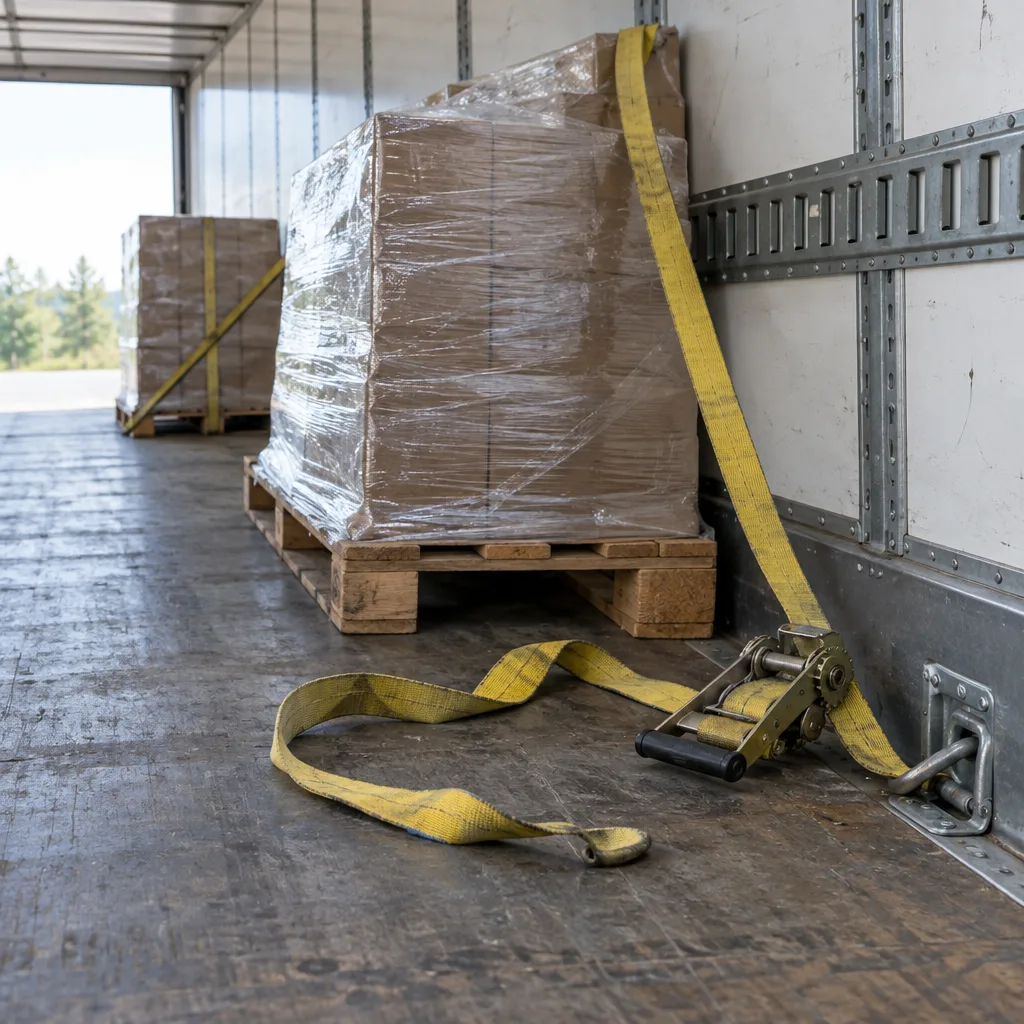
Cargo and scene evidence can help show what the load looked like after a crash, where freight came to rest, and the condition of the trailer or restraints. Photographs may capture details that are harder to assess after cargo is removed or a vehicle is repaired. If it is safe and practical, relevant images can include the load, trailer interior, doors, straps, chains, anchor points, debris, vehicle positions, and the surrounding roadway. No one should enter a dangerous area or delay needed medical care to gather evidence.
A single picture rarely answers every question. Investigators may compare images with the crash report, witness accounts, bills of lading, loading instructions, inspection records, dispatch communications, and available electronic vehicle or fleet data. Records can help establish when and where freight was loaded, who handled it, and whether anyone documented a concern. Some materials may be held by a carrier, shipper, or other business, and they may not be available to an injured person without a formal request or legal process.
For practical guidance on truck crash evidence that may need prompt preservation, see our related resource. In a San Antonio investigation, photographs and records can help place events in context, but their meaning should be assessed alongside the full account of the crash.
Why can a cargo-related claim involve several insurers?
If several businesses had roles in loading or transportation, their insurance arrangements may differ. The multiple insurance policies that may apply after a commercial truck crash can mean separate claims representatives ask for information. Coverage questions are distinct from deciding whether any participant was legally at fault. Keeping those questions separate can help readers understand why a cargo investigation may take careful coordination.
How to Approach a Cargo-Shift Claim Without Losing Important Context
After a cargo-related collision, the physical scene can change quickly. Freight may be moved to clear a road, a trailer may be taken out of service, and equipment may be repaired or discarded. That does not mean a person should take risks to preserve evidence. It does mean that early documentation and accurate reporting may be useful when safely available.
Common issues that can complicate an investigation include:
- Assuming the driver was the only person involved in securing or handling the load.
- Treating a photograph of spilled cargo as proof of how or when it shifted.
- Overlooking the condition and placement of tie-downs, blocking, bracing, or other securement equipment.
- Relying on one account of events without comparing it to scene evidence and records.
- Assuming that identifying a possible additional participant automatically establishes that party’s liability.
A careful review may compare the trailer and cargo condition with loading records, communications, inspection information, and the timing of the trip. In some cases, it may also be important to determine who controlled or preserved relevant evidence. These details can help distinguish a load that was improperly secured before departure from other possible explanations, but conclusions depend on the facts.
Deadlines may apply to injury claims, and identifying additional parties does not eliminate the need to understand them. Readers can review general information about Texas filing deadlines for a San Antonio truck accident claim. Applicable time limits can depend on the circumstances and may be affected by particular legal issues. Laws and procedures can change, so a licensed Texas attorney can explain how current rules relate to an individual situation.
Frequently Asked Questions
Does a cargo shift prove that the truck driver caused the crash?
No. A shifted or fallen load does not, by itself, establish who caused a collision or whether anyone was legally responsible. The driver may be one person whose actions are examined, but investigators may also consider loading, securement, inspection, equipment, and transportation roles. The answer depends on the evidence and the duties applicable to each participant under the circumstances.
What photographs may help after a truck cargo spill?
If it is safe, photographs may document the cargo’s location, the trailer interior, visible restraints, the roadway, debris, and the positions of vehicles. Images taken from more than one angle can provide context. Do not put yourself in danger or delay urgent care to take pictures. Other evidence, such as witness information and business records, may also help explain what photographs alone cannot show.
Can a shipper or cargo loader be part of a San Antonio truck claim?
A shipper or loader may be examined when the facts suggest that its work could be relevant, but involvement in the transportation process does not automatically mean legal liability. Investigators may look at who performed particular tasks, what instructions applied, and whether those actions contributed to the crash. A claim’s legal analysis depends on the evidence and applicable Texas law.
Why might an investigation take longer when cargo shifts?
A cargo-related investigation may require information from several people or businesses, including loading and securement records, photographs, inspection materials, and communications. Evidence may be held in different places, and investigators may need to compare accounts with the physical condition of the trailer and load. The time involved varies with the facts, the availability of records, and any disputes about what happened.
How Husain Law Can Help
A cargo-shift collision can raise questions about freight handling, securement, inspections, transportation, and insurance. Husain Law is dedicated to helping injured people understand the issues that may affect a Texas truck accident claim. The firm can evaluate the available information, identify questions that may warrant further investigation, and explain how different participants’ roles may be considered. No particular result can be promised, and each situation depends on its facts and applicable law. If you were hurt in a San Antonio truck crash involving shifted or fallen cargo, contact Husain Law to discuss your circumstances and request a free consultation or case evaluation.
Legal disclaimer: The information in this article is for educational purposes only and does not constitute legal advice. Contact a qualified attorney authorized to practice in the jurisdiction that applies to your matter for advice specific to your situation. Laws vary by jurisdiction and may change.


Leave a Reply
Want to join the discussion?Feel free to contribute!