
When Can a Texas Work Truck Crash Become a Third-Party Case?
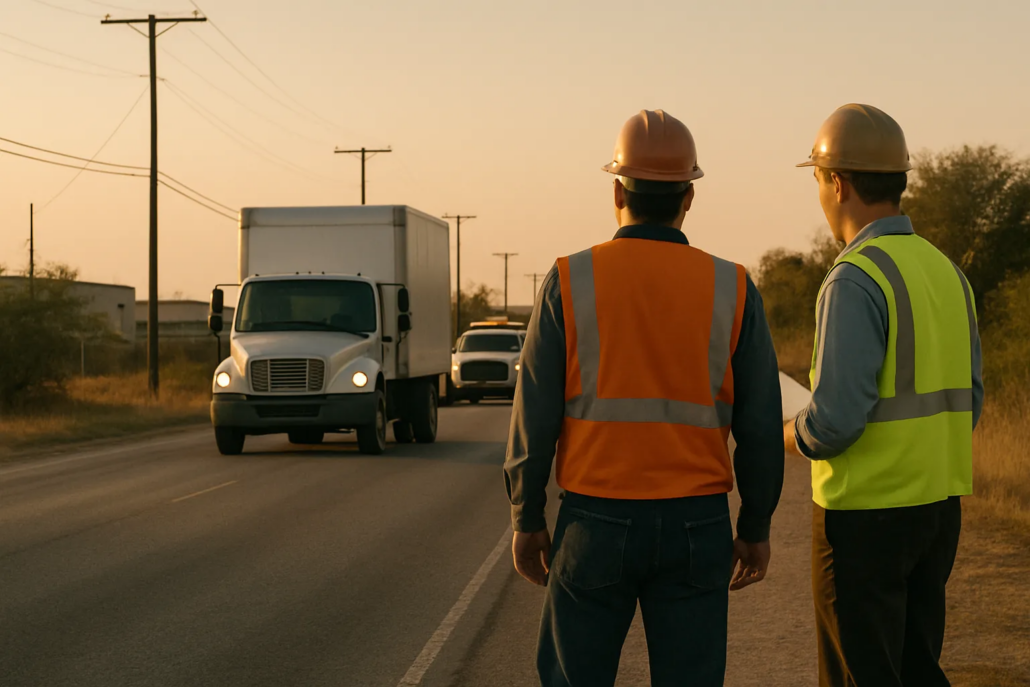
A delivery worker is driving between job sites when an 18-wheeler changes lanes and causes a collision. Or a construction employee is struck while working near a commercial vehicle. In either situation, workers’ compensation may be part of the picture—but it may not be the entire legal picture.
If you are researching a Texas work truck accident third-party claim in San Antonio, Texas, the key question is whether someone other than your employer may have caused or contributed to the crash. When a Texas trucking firm may be liable for its driver can help explain why the truck owner, carrier, or another company may be treated differently from the employer providing workers’ compensation benefits.
Husain Law helps injured workers understand how these overlapping issues may fit together. This article explains who may qualify as a third party, how benefits and liability claims can coexist, what evidence matters, and why deadlines require prompt attention.
When Can a Texas Work Truck Accident Third-Party Claim Arise?
Workers’ compensation generally addresses job-related injuries through benefits such as medical care and partial wage replacement, subject to Texas law and the worker’s circumstances. A third-party claim is different. It is typically a negligence-based claim against a person or business that was not the injured worker’s employer.
For example, a delivery employee may receive workers’ compensation through the delivery company while also pursuing a claim against a separate trucking carrier whose driver caused the collision. A construction worker may have benefits through a contractor but a potential claim against a hauling company, equipment owner, or maintenance provider.
Why the employer and the third party are treated differently
Texas workers’ compensation law can limit an employee’s ability to sue a subscribing employer for ordinary negligence. That limitation does not automatically protect every business connected to a crash. The identity of each entity, its relationship to the worker, and its role in causing the collision must be examined separately.
In San Antonio, Texas, a fact-specific review may involve the employment relationship, contracts, vehicle ownership, driver supervision, and control over the worksite or delivery route. A company’s label alone may not answer the liability question. The evidence may matter more than the label.
Who may be a third party?
- A trucking company or motor carrier that employed or controlled the driver.
- A vehicle owner, leasing company, broker, or logistics provider.
- A contractor or subcontractor separate from the injured worker’s employer.
- A maintenance provider whose work may have contributed to a mechanical failure.
- A manufacturer or other entity, when a defective component or product is involved.
The particular facts determine whether a viable claim exists; not every connected business is legally responsible.
How Do Benefits, Insurance, and Other Parties Fit Together?
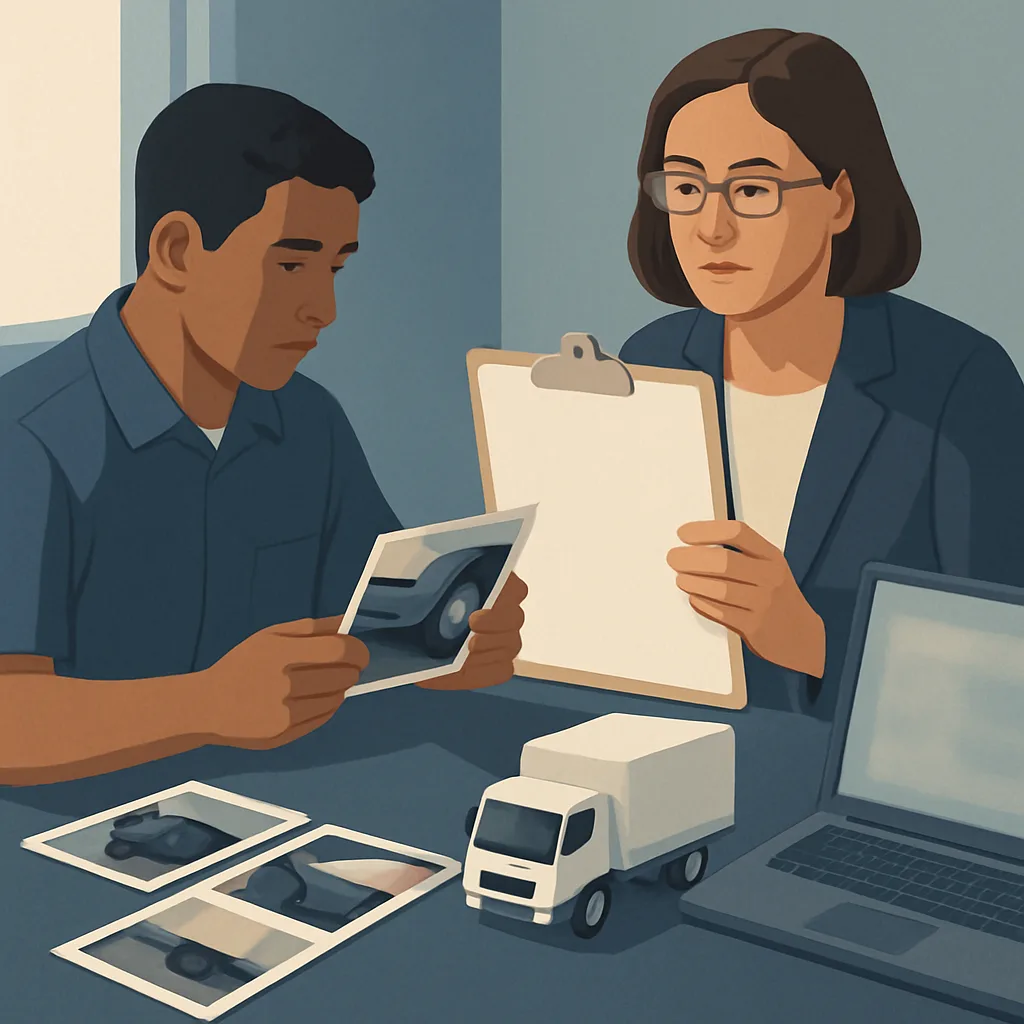
A workers’ compensation claim and a third-party liability claim may involve different legal theories and different insurance policies. Workers’ compensation may address covered medical treatment and income benefits, while a negligence claim may seek damages not available through the workers’ compensation system. The interaction can be complex, especially when medical expenses or benefit payments create reimbursement interests.
Workers may encounter a workers’ compensation carrier, a commercial auto insurer, a trucking company’s liability insurer, or other insurers. Understanding the insurance policies involved in a commercial truck crash is important because the existence of coverage does not by itself establish liability or determine the value of a claim.
Investigating the trucking company’s role
A separate carrier may face a direct negligence claim based on conduct such as hiring, training, supervision, or vehicle maintenance. Relevant information may include driver qualification materials, training records, inspection history, safety policies, dispatch communications, and electronic vehicle data. Evidence of negligent hiring or inadequate truck-driver training may support a theory that differs from simple vicarious responsibility for a driver’s conduct.
A contractor label also does not automatically resolve the issue. The contract, actual control over the driver, leasing arrangement, and day-to-day work relationship may all matter when evaluating whether an independent-contractor label changes truck liability. For additional context on this issue, see Does a Contractor Label Shift San Antonio Truck Liability?.
Maintenance and equipment issues
Truck crashes do not always result from driver conduct. Brake, tire, steering, lighting, or cargo-securement problems may point to a carrier, owner, maintenance company, or other entity. Inspection reports, repair invoices, service schedules, photographs, and vehicle-defect evidence may help identify records showing that poor truck maintenance caused the crash.
If the crash occurred on a San Antonio roadway or at a local worksite, police reports, employer incident reports, surveillance footage, and witness accounts may also help establish what happened. These sources should be considered alongside medical and wage records rather than viewed in isolation.
What Should an Injured Texas Worker Do to Protect a Potential Claim?
A worker may need to manage several processes at once. Reporting the workplace injury and complying with workers’ compensation procedures does not necessarily identify every outside party or preserve a separate negligence claim. Depending on the facts, an attorney may evaluate the following issues.
- Report the workplace injury through the appropriate channel. A prompt report can create an important record, but workers should understand that employer notice requirements and workers’ compensation procedures are distinct from a civil claim against another company.
- Preserve available evidence. Photographs, video, vehicle information, witness names, delivery records, work orders, safety reports, and communications may become important. Review guidance on evidence to preserve after a San Antonio truck crash for examples of records that may be time-sensitive.
- Identify every potentially responsible entity. The employer, truck driver, carrier, broker, owner, maintenance provider, and other businesses may have different roles and insurance coverage.
- Track medical care and work restrictions. Medical records, treatment charges, wage information, and documented restrictions may help connect the crash to claimed losses. Workers should not make medical decisions based on this article; treatment questions belong with qualified healthcare professionals.
- Review deadlines early. Workers’ compensation procedures and civil claims can involve different notice and filing requirements. Texas deadlines for filing a San Antonio truck accident claim should be evaluated for the specific facts, including the identity of the defendant and the type of claim.
What damages may be different?
Workers’ compensation benefits and a third-party claim do not necessarily provide the same categories of recovery. A civil claim may involve damages for certain losses that workers’ compensation does not fully address, subject to proof and applicable Texas law. These can include pain and suffering, impairment, disfigurement, and losses tied to future earning capacity.
Evidence about how a truck crash can reduce a Texas worker’s earning power may be relevant when an injury affects the ability to return to the same job, work schedule, or occupation. Medical payments, benefit reimbursement rights, and liens may also affect how a recovery is handled. Workers should understand how medical bills and liens can affect a truck injury recovery before assessing the practical value of a potential settlement.
In San Antonio, Texas, a civil lawsuit may proceed in an appropriate court based on jurisdiction and the parties involved. Texas law governs many of these issues, but laws and procedures can vary by location and may change after publication.
Frequently Asked Questions
Can I receive workers’ compensation and sue a trucking company?
Possibly. Workers’ compensation benefits may be available through the employer, while a separate negligence claim may exist against a trucking company or another non-employer. The two matters involve different legal standards, deadlines, and insurance interests. The facts must show that the outside party owed a legal duty and contributed to the crash or resulting injuries. A licensed Texas attorney can evaluate how the claims may interact.
Does an independent contractor arrangement prevent a third-party claim?
Not necessarily. A contract may be relevant, but it is not always the only factor. Actual control over the driver, vehicle ownership, dispatching, supervision, and the parties’ conduct may affect the analysis. An injured worker should not assume that a company is protected from liability merely because paperwork describes someone as an independent contractor. The full relationship and crash evidence require careful review.
What if the truck driver was working for a different company?
A different employer may be precisely why a third-party claim deserves evaluation. The driver’s carrier, vehicle owner, broker, or another business may have separate responsibilities and insurance coverage. At the same time, the driver’s employment status and the company’s control can affect which legal theories apply. Crash reports, contracts, electronic records, and witness accounts may help clarify the relationships.
Are there special issues if the crash happened at a construction site?
Yes. Construction sites may involve multiple contractors, subcontractors, equipment owners, delivery companies, and site operators. Worksite control, safety responsibilities, traffic plans, and vehicle access rules may become relevant. Workers’ compensation status can also differ among businesses. Because construction arrangements vary widely, a worker may benefit from preserving contracts, site photographs, incident reports, and witness information while the facts are still available.
How Husain Law Can Help
Husain Law is dedicated to helping injured delivery workers, construction employees, and other Texas workers understand the relationship between workers’ compensation and potential third-party claims. The firm can review the crash circumstances, employment relationships, available evidence, insurance issues, and possible damages without assuming that every case follows the same path.
The team is committed to fighting for workers’ rights and is ready to evaluate your situation. If you were injured in a crash involving an 18-wheeler or other commercial truck while working in San Antonio, contact Husain Law for a free consultation or case evaluation.
The information in this article is for educational purposes only and does not constitute legal advice. Contact a qualified attorney licensed in San Antonio, Texas for advice specific to your situation.


Leave a Reply
Want to join the discussion?Feel free to contribute!