
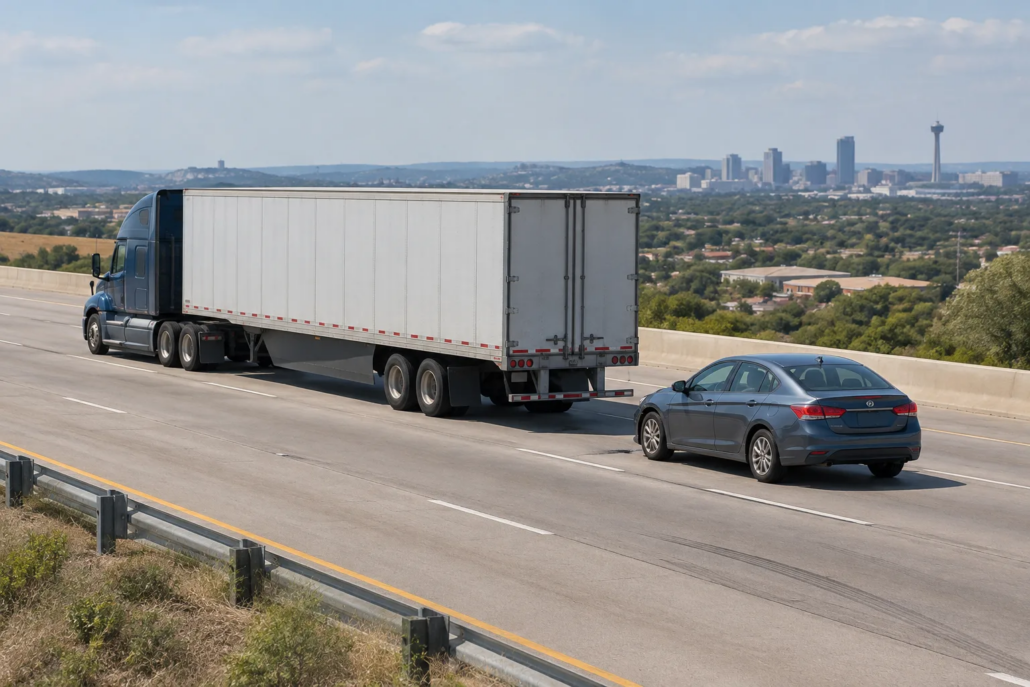
Could Onboard Data Clarify a San Antonio Rear-End Crash?
A rear-end collision with an 18-wheeler can leave people asking a basic question: could the truck have stopped in time? A rear-end truck accident claim in San Antonio may turn on more than the fact that one vehicle hit another from behind. Investigators may examine the truck’s speed, following distance, braking, road conditions, and when a hazard became visible. Those details can help explain what happened, but no single clue necessarily tells the whole story.
Husain Law helps people understand the issues that may arise in truck collision claims. This article explains how stopping distance and timing shape an investigation, what physical and electronic evidence may be reviewed, and how responsibility may extend beyond the driver depending on the facts. The goal is to make the process easier to understand—not to predict the outcome of any particular claim.
Why Following Distance and Braking Matter in a San Antonio Truck Claim
A truck needs time and distance to respond to a developing hazard. Its stopping distance depends on factors such as speed, vehicle weight, braking condition, tire grip, road grade, and weather. A loaded tractor-trailer traveling at highway speed may need substantially more room to stop than a passenger vehicle, but the actual distance varies with circumstances. That is why investigators look at the sequence of events rather than rely on a general estimate.
Texas law generally requires a driver following another vehicle to maintain an assured clear distance that is reasonable and prudent, considering speed, traffic, and roadway conditions. The rule appears in the Texas Transportation Code. It does not by itself settle fault in every rear-end crash; the evidence and circumstances matter. Laws and their application can vary by location and may change.
Reconstructing the seconds before impact
Investigators may ask when the truck driver first could see a stopped or slowing vehicle, whether traffic ahead was already slowing, and how much space separated the vehicles. They may compare witness accounts, roadway layout, vehicle positions, and available video. In San Antonio, as elsewhere, congestion, merging traffic, rain, or a sudden slowdown may affect the sequence—but those conditions do not automatically establish who was responsible.
What braking evidence can show
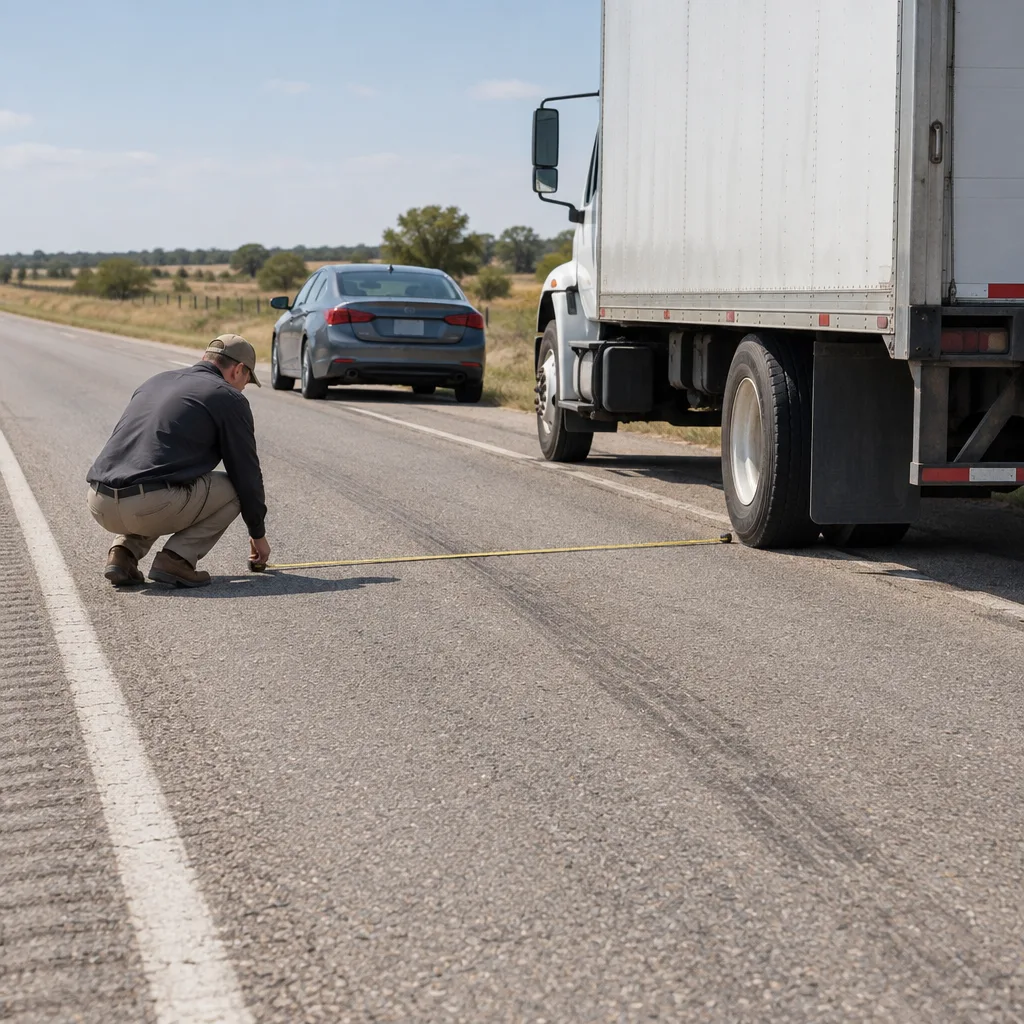
Skid marks, tire marks, vehicle damage, and the truck’s braking system may help indicate whether braking occurred and how the collision unfolded. Some trucks use anti-lock braking systems, so a lack of long, obvious skid marks does not necessarily mean the driver never braked. Inspection findings and maintenance history may help distinguish delayed braking from a possible equipment issue. For more detail, see truck maintenance records that may reveal brake problems.
What Evidence Investigators Examine After a Rear-End 18-Wheeler Collision
Physical evidence can be interpreted alongside electronic records. Investigators may document the final positions of vehicles, debris, roadway marks, damage patterns, and visibility conditions. The location and shape of damage can help assess the angle and force of impact, but damage alone may not prove speed or fault. Photos taken soon after a crash can also help preserve the scene before vehicles are moved or road conditions change.
Electronic information may add a timeline. Depending on the truck and what data is available, records may include engine or event data, electronic logging device information, GPS or fleet telematics, and camera footage. These sources do not all record the same information, and their availability and retention periods vary. A qualified investigator may need to interpret the records in context rather than treat one data point as a complete explanation.
Comparing records with the scene
A useful investigation may compare timestamps and recorded vehicle activity with physical evidence and witness observations. For example, a speed or braking change in available truck data may be considered alongside the location of roadway marks and the damage to both vehicles. Investigators may also look at traffic signals, nearby cameras, weather, lighting, and road work where relevant. In San Antonio, the responding agency’s crash report may be one source among several; it is not necessarily a final decision on civil responsibility.
Data can be overwritten, lost, or become harder to obtain as time passes. People exploring preserving electronic truck-crash evidence can learn more about the records that may matter and why preservation can be important. What can be requested or preserved depends on the source, ownership, and circumstances.
Who May Be Responsible, and What Can Complicate a Claim?
A rear-end impact may point investigators toward the truck’s following distance and braking, but responsibility is not always determined by impact position alone. They may examine whether the driver had enough time to react, whether speed matched traffic and road conditions, and whether a mechanical issue affected stopping. The actions of the vehicle struck from behind and other surrounding circumstances may also be relevant. Texas applies comparative responsibility rules, so the evidence about each party’s conduct can matter to a civil claim.
A carrier’s role may also be considered when the evidence raises questions about training, dispatch practices, vehicle inspection, or maintenance. That does not mean the company is automatically responsible whenever one of its trucks is involved. The specific relationship and evidence matter. Read about when a Texas trucking company may share responsibility for a broader discussion of how company-related facts may enter an investigation.
Common issues that can complicate the evidence include:
- Changing scene conditions: Vehicles may be moved, and weather or traffic can alter roadway evidence.
- Conflicting timelines: Witness recollections, video timestamps, and truck data may not align at first.
- Incomplete records: A camera may not cover the relevant view, or a particular system may not store the information investigators need.
- Assumptions based on damage: The appearance of vehicle damage may be useful, but it should be considered with other evidence.
In San Antonio, a civil case may involve courts with jurisdiction in Bexar County, depending on the circumstances and applicable venue rules. The investigation and legal process are fact-specific, and a crash report alone may not resolve disputed questions.
Frequently Asked Questions
Does a rear-end impact automatically make the truck driver liable?
No. A rear-end impact is important evidence, but it does not automatically determine legal responsibility in every case. Investigators may consider following distance, speed, braking, road and traffic conditions, visibility, and the actions of everyone involved. Texas law provides a general rule about maintaining a reasonable and prudent following distance, but how it applies depends on the facts. A report or initial account may not include every relevant record.
Can a truck stop in time if traffic suddenly slows?
It depends on the truck’s speed, weight, following distance, braking condition, road surface, weather, grade, and when the slowdown became apparent. A sudden hazard may be relevant, but it does not answer by itself whether the truck was being operated safely. Investigators may use scene evidence, witness accounts, video, and available vehicle data to evaluate the timing and stopping sequence in context.
What if the truck’s electronic data is unavailable?
A claim may still be investigated using other available evidence, such as photographs, vehicle damage, witness statements, law-enforcement records, nearby video, and inspection or maintenance documents. Not every truck stores the same data, and some systems may not retain information for long. The absence of one type of electronic record does not, by itself, prove or disprove how a collision happened.
Can poor road conditions affect a San Antonio truck accident claim?
Yes. Rain, standing water, road grade, construction, poor visibility, or heavy traffic may affect traction, stopping distance, and the time available to react. Investigators may compare those conditions with the truck’s speed, following distance, braking evidence, and the timing of the hazard. Conditions are part of the overall picture; they do not automatically excuse or establish responsibility.
How Husain Law Can Help
Husain Law is dedicated to helping people understand the evidence and legal issues that can arise after a commercial truck collision. A review may consider available crash records, vehicle damage, braking and maintenance information, electronic data, and how the timing of a hazard fits the reported events. The firm is committed to fighting for clients’ rights while evaluating each situation on its own facts; no particular result can be promised. If you were involved in a rear-end 18-wheeler crash in San Antonio, contact Husain Law to discuss your circumstances and request a free consultation or case evaluation.
The information in this article is for educational purposes only and does not constitute legal advice. Contact a qualified attorney authorized to practice in the jurisdiction that applies to your matter for advice specific to your situation.


Leave a Reply
Want to join the discussion?Feel free to contribute!